


What is a contrast-enhanced MRI?
The method used to image different organs and tissues of the body in detail provides more detailed results with contrast-enhanced MRI. Contrast-enhanced MRI clarifies details of vessels and lesions and is preferred especially in patients suspected of having tumors or inflammation. During the procedure, radio waves and a magnetic field are used to record signals returning from protons. Thanks to contrast-enhanced MRI, doctors can examine the brain, liver, kidneys, and joints in detail. While non-contrast MRI is sometimes sufficient, contrast imaging provides additional information. The patient must remain still during the procedure and remove any metal objects. The scan time generally varies between 20 and 60 minutes. Contrast-enhanced MRI is critical for accurate diagnosis and treatment planning and is safely applied in modern medicine.
When is a contrast-enhanced MRI requested?
Contrast-enhanced MRI is requested when detailed examination of structural changes in organs such as the brain, liver, kidneys, or joints is necessary. It is recommended by doctors in cases of suspected tumors, vascular occlusions, infections, and inflammation. This method provides clearer and more detailed images compared to non-contrast scans. The procedure uses magnetic fields and radio waves and involves no radiation. Patients must remain still and remove all metal objects during a contrast-enhanced MRI. The procedure is considered a safe and effective method for diagnosis and treatment planning. Contrast-enhanced MRI helps doctors make detailed decisions and is frequently used in modern medicine.
What is the purpose of contrast medium?
Contrast medium is used in MRI scans to more clearly visualize vascular structures and lesion details. This substance makes it easier to distinguish between organs and tissues. Contrast medium is usually administered intravenously and works in conjunction with radio waves during imaging. Contrast-enhanced MRI allows for the clear detection of conditions such as tumors, vascular occlusions, or inflammation. Contrast medium may cause allergies or mild side effects in some patients. The patient must remain still and remove any metal objects during the procedure. Contrast medium provides a critical reference in diagnosis and treatment planning and is used safely in modern medicine.
How is detailed imaging achieved with contrast-enhanced MRI?
Contrast-enhanced MRI (MRI) uses a contrast agent to perform an MRI scan, allowing for detailed examination of organs and tissues. This method clearly observes structural changes such as tumors, vascular occlusions, and inflammation. During a contrast-enhanced MRI, magnetic fields, radio waves, and signals reflected from protons are recorded. The patient must remain still and remove any metal objects during the procedure. The contrast agent is administered intravenously and improves image quality. Contrast-enhanced MRI enables doctors to make detailed diagnoses and is critically important in treatment planning. While non-contrast MRI may suffice in some cases, contrast-enhanced MRI provides additional information.
Which diseases are diagnosed using contrast-enhanced MRI?
Contrast-enhanced MRI is used in patients suspected of having tumors, vascular occlusions, or inflammation in the brain, liver, kidneys, heart, and joints. This method allows for detailed examination of organs and tissues and supports the diagnostic process. Thanks to contrast-enhanced MRI, doctors can clearly observe structural differences. The contrast agent improves image quality and highlights lesion details. The patient must remain still during the procedure and remove any metal objects. Contrast-enhanced MRI is a critical method in modern medicine for diagnosis and treatment planning. The scan time generally ranges from 20 to 60 minutes.
How is contrast medium administered?
Contrast medium is usually administered intravenously and works in conjunction with the signals reflected from the protons during the MRI scan. This makes the differences between organs and tissues more clearly visible. Contrast-enhanced MRI allows for detailed examination of problems such as tumors, vascular occlusions, and inflammation. The patient must remain still and remove all metal objects during the procedure. Contrast medium may cause mild side effects in some patients, and the doctor will inform the patient beforehand. Contrast-enhanced MRI provides a critical reference in diagnosis and treatment planning. This method is safely applied in modern medicine and improves image quality.
How is a contrast-enhanced MRI scan performed?
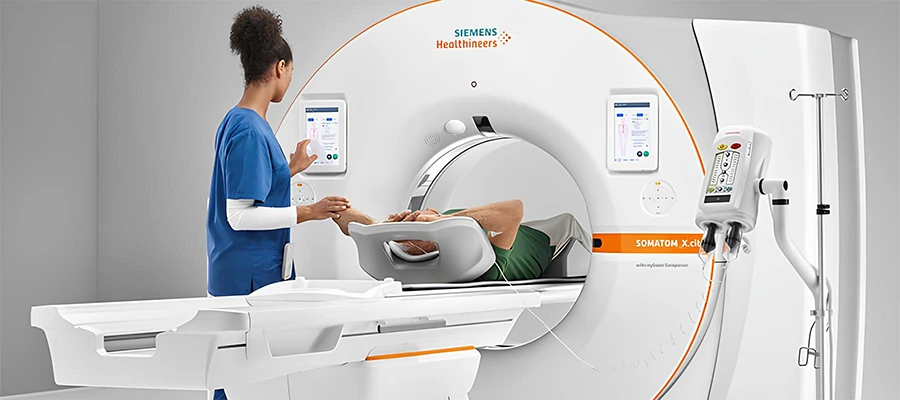
During the scan, the patient is positioned inside the machine and remains still. Magnetic fields and radio waves record the signals returning from the protons. Contrast material is administered intravenously, clarifying details of lesions and blood vessels. Contrast MRI allows for detailed imaging of the brain, liver, kidneys, and joints. Metal objects are removed during the procedure, and the patient’s position is maintained. The scan typically lasts between 20 and 60 minutes. Contrast MRI provides a critical reference for doctors in diagnosis and treatment planning. It is safely used in modern medicine and improves image quality.
Preparation Process Before Contrast-Enhanced MRI
The patient should remove all metal objects before the MRI scan and inform the doctor about any regular medications. Fasting may be necessary if a contrast-enhanced MRI is to be performed. Comfortable clothing will make it easier to remain still during the procedure. Pregnancy or kidney problems should be reported to the doctor beforehand. The noise produced by the machine during the procedure is normal, and earplugs can be used. Remaining still, maintaining position, and the preparation process improve image quality. These precautions ensure that the MRI results are used safely in diagnosis and treatment planning. Contrast-enhanced MRI provides detailed images.
How long does a contrast-enhanced MRI take?
The scan time typically ranges from 20–60 minutes and varies depending on the type of MRI chosen. A contrast-enhanced MRI may take slightly longer to clearly show details of vessels and lesions. A non-contrast MRI may be completed in a shorter time in some cases. The patient must remain still during the procedure and remove any metal objects. Stillness is critical for image quality. Noise and instrument vibrations are normal. Contrast-enhanced MRI is reliably used in modern medicine for diagnosis and treatment planning, providing clear results.
What are the side effects of contrast medium?
Contrast agents can rarely cause side effects such as allergies, skin itching, or mild nausea. Most patients do not experience any adverse reactions to these substances. Before the MRI, the doctor will obtain information about existing illnesses and medications. During the procedure, the patient must remain still and remove any metal objects. Side effects are generally short-lived and mild. Contrast-enhanced MRI, when performed with the correct precautions, is safe and improves image quality. This method plays a critical role in diagnosis and treatment planning.
Is contrast-enhanced MRI harmful?
Contrast-enhanced MRI is a safe imaging method because it does not involve radiation. The contrast agent used poses no serious risks in most patients, except for mild side effects. The patient must remain still during the procedure and remove all metal objects. Contrast-enhanced MRI clarifies details of vessels and lesions, enabling accurate diagnosis and treatment planning. Non-contrast MRI may be sufficient in some cases, but contrast-enhanced imaging provides additional information. The magnetic field of the MRI machine is safe and widely used in modern medicine. When the correct protocol is followed, contrast-enhanced MRI is harmless and improves image quality.
In what situations should a contrast-enhanced MRI not be performed?
Certain illnesses and health conditions can limit the use of contrast-enhanced MRI, and the procedure may not always be suitable. Contrast-enhanced MRI may not be recommended by a doctor in cases of severe kidney failure, a history of severe allergic reactions, or early pregnancy. The contrast agent may increase the risk of side effects in some patients. Patients are required to remove all metal objects during the procedure. Contrast-enhanced MRI clarifies details of vessels and lesions, but the scan is not performed in unsuitable situations. Alternative methods or non-contrast MRI may be preferred. Immobility and maintaining position are important for image quality. The doctor determines suitability based on the patient’s health status and previous medical history. These precautions are critical for a safe and accurate diagnosis.
Is Contrast-Enhanced MRI Safe for Kidney Patients?
Before performing a contrast-enhanced MRI on patients with impaired kidney function, the doctor will always conduct an evaluation. Since the contrast agent is excreted through the kidneys, the procedure may be risky in cases of severe kidney failure. In cases of mild or moderate kidney problems, the doctor may perform a contrast-enhanced MRI according to the protocol. During the procedure, the patient must remain still and remove all metal objects. Contrast-enhanced MRI allows for clear visualization of vascular and lesion details. Risks to kidney health are assessed, and necessary precautions are taken. When performed correctly under the supervision of a doctor, contrast-enhanced MRI provides high-quality image results.
Differences Between MRI with and without Contrast
Contrast-enhanced MRI clarifies details of vessels and lesions, while non-contrast MRI provides sufficient images in some cases. With contrast-enhanced MRI, structures such as tumors, inflammation, and vascular occlusions are seen more clearly. Non-contrast MRI can be completed in a shorter time and usually does not require additional substances. The patient must remain still during the procedure and remove any metal objects. Contrast-enhanced MRI provides additional information and is preferred for detailed diagnosis. Although image quality is high with both methods, contrast-enhanced imaging reveals lesions more clearly. This difference plays a critical role in diagnosis and treatment planning.
Things to Consider After a Contrast MRI
Increasing fluid intake after the procedure helps the contrast agent to be eliminated from the body more quickly. Light exercise and rest may be recommended. Although the risk of an allergic reaction after contrast-enhanced MRI is low, symptoms such as redness or itching of the skin may occur. The patient should consult their doctor if they experience any discomfort. The use of metal objects after the procedure does not affect the image, but care should be taken. Contrast-enhanced MRI is a method that clarifies the details of vessels and lesions. These precautions ensure that the procedure is safe and effective. Follow-up by a doctor is recommended for accurate interpretation of the results.
Contrast MRI Prices 2026
In 2026, contrast MRI prices typically range between €1500 and €6000.
Should a contrast-enhanced MRI be performed on an empty or full stomach?
Contrast-enhanced MRI is usually performed on an empty stomach, as this ensures the safe use of the contrast agent. Light meals may be permitted in some cases, but doctor’s instructions are crucial. The patient must remain still during the procedure and remove all metal objects. The contrast agent is administered intravenously and improves image quality. Whether to fast or not depends on the patient’s general health and the type of scan. When performed with the correct protocol, contrast-enhanced MRI is safe and provides detailed images.
How long does it take for the contrast agent to be eliminated from the body?
The contrast agent is usually eliminated from the body through the kidneys within 24 hours. In healthy individuals, the substance is rapidly removed through urine. In patients with impaired kidney function, the elimination time may be prolonged. Adequate fluid intake after contrast-enhanced MRI accelerates the elimination of the substance. The patient should remain still during the procedure and remove all metal objects. The contrast agent is used to clarify details of vessels and lesions. This process plays a critical role in accurate diagnosis and treatment planning.
Does a contrast-enhanced MRI hurt?
Contrast-enhanced MRI is a painless procedure for most patients, with only slight discomfort felt during the intravenous administration of the contrast medium. During the procedure, magnetic fields and radio waves record signals returning from protons. Contrast-enhanced MRI provides clear visualization of vascular and lesion details. Patients should remain still and remove any metal objects. A slight sensation of pressure or cold is considered normal during the procedure. Contrast-enhanced MRI is safely used in modern medicine and provides a critical reference for accurate diagnosis.
Is contrast-enhanced MRI risky?
In general, contrast-enhanced MRI is a safe procedure, and serious risks are rare. The contrast agent may cause mild side effects in some patients. The patient must remain still during the procedure and remove all metal objects. Contrast-enhanced MRI clarifies details of vessels and lesions, providing accurate diagnosis. In cases of pregnancy or severe renal impairment, the doctor will determine the protocol. These precautions ensure the procedure is safe and effective. The magnetic field of the MRI machine is safe and does not involve radiation.
Are there any side effects after a contrast-enhanced MRI?
Most patients experience no side effects after contrast-enhanced MRI, but mild itching, redness, or nausea may occur. The contrast agent is usually administered intravenously and is quickly eliminated from the body. The patient must remain still during the procedure and remove any metal objects. Side effects are generally short-lived and mild. Contrast-enhanced MRI clarifies details of vessels and lesions and is important for accurate diagnosis. The doctor will provide follow-up recommendations after the procedure. This method is safely applied in modern medicine and provides effective results.
Is contrast-enhanced MRI suitable for everyone?
Contrast-enhanced MRI may not be suitable for every patient, and in some cases, a non-contrast scan is preferred. Early pregnancy, severe renal failure, or allergies to contrast agents may also be unsuitable for the procedure. Contrast-enhanced MRI clarifies details of vessels and lesions and plays a critical role in the diagnostic process. The patient must remain still during the procedure and remove all metal objects. The doctor determines suitability by evaluating the patient’s general health and medical history. In modern medicine, contrast-enhanced MRI, safely performed, provides detailed images and is crucial for accurate diagnosis.