


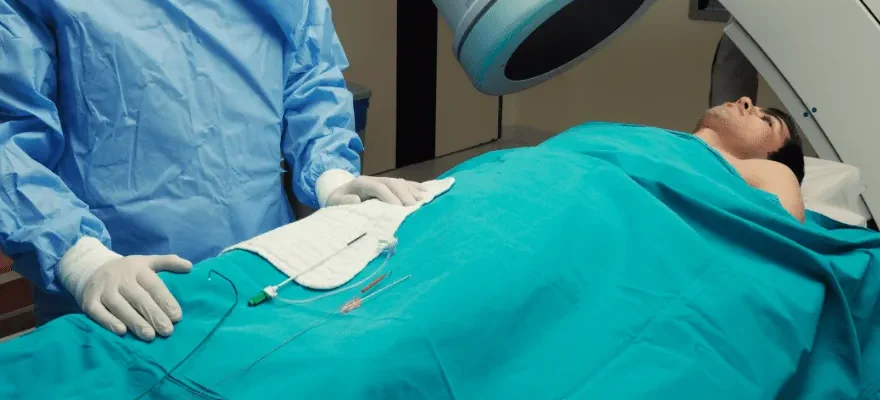
What is angiography?
Among the advanced imaging techniques used in the evaluation of cardiovascular health, angiography is one of the most important methods that allows for a detailed examination of the internal structure of blood vessels. Angiography is performed on the principle of making the vessels visible with X-rays thanks to the contrast agent injected into the vessel. In this way, angiography can clearly detect vascular blockages, narrowings, and structural abnormalities. The images obtained during the angiography procedure can be monitored instantly, and intervention can be performed immediately if necessary. Angiography plays a critical role, especially in the early diagnosis of cardiovascular diseases. Thanks to angiography, diseases can be identified before they progress, and an appropriate treatment plan can be created. Widely used in modern medicine, angiography stands out as an effective method in both diagnostic and treatment processes.
For what purposes is angiography performed?
Angiography plays a significant role among the methods used for detailed examination of vascular health and early diagnosis of potential diseases. It is performed to identify vascular blockages, evaluate blood flow, and diagnose heart diseases. Furthermore, angiography helps in planning the treatment process by examining abnormalities in the vascular structure. Thanks to angiography, problems within the vessels can be detected in the early stages, which increases the success of treatment. Angiography plays a critical role, especially in individuals at risk of heart attack, and ensures the determination of the correct treatment method.
How does angiography work as a method of imaging blood vessels?
Advances in imaging technologies have made it possible to examine the vascular structure in detail, and angiography has gained a significant place in this field. Angiography works on the principle of imaging a contrast agent injected into the blood vessel using X-rays. During angiography, images obtained as the contrast agent travels through the vessel are displayed on the screen in real-time. This allows for a detailed examination of the internal structure of blood vessels. Angiography increases diagnostic accuracy by offering real-time imaging and enables the detection of even small vessel problems. Narrowings and blockages within blood vessels can be clearly identified through angiography.
In what situations is angiography necessary?
Choosing the right imaging method is crucial in evaluating cardiovascular complaints, and angiography is frequently preferred in this regard. Angiography is necessary, especially in cases of chest pain, shortness of breath, and suspected heart attack. It is also performed on patients suspected of having vascular blockages. Thanks to angiography, the condition of the vessels can be examined in detail, and potential risks can be identified. Angiography provides a significant advantage in terms of early diagnosis and helps in planning the treatment process. The findings obtained through angiography reveal the severity of the disease, enabling the correct intervention. Angiography is a widely used and life-saving diagnostic method in modern medicine.
Which vascular diseases can be detected with angiography?
Early diagnosis of vascular diseases is crucial for successful treatment, and angiography plays an effective role in this process. Angiography can clearly identify diseases such as vascular blockages, narrowing, and atherosclerosis. In addition, angiography is used to determine aneurysms and abnormalities in the vascular structure. Thanks to angiography, diseases are detected in the early stages, allowing for more successful treatment management. Angiography significantly contributes to the diagnostic process by showing the vascular structure in detail. The results obtained from angiography help in creating the correct treatment plan. Due to its wide range of applications, this method holds an important place in the healthcare field and offers an effective solution for identifying many vascular diseases.
What does coronary angiography show?
Among the methods used to evaluate the heart’s blood vessels, angiography plays a significant role, particularly in the examination of the coronary arteries. Angiography allows for detailed visualization of the condition of the vessels supplying the heart. Coronary angiography clearly reveals blockages and narrowings in the vessels. The images obtained through angiography provide important information in the diagnosis of heart diseases. Angiography assesses blood flow to the heart muscle and identifies potential risks. It helps in creating the correct treatment plan and plays a crucial role in protecting heart health. Angiography stands out as an indispensable method for the early diagnosis of cardiovascular diseases.
What are the types of angiography?
Among the methods used to examine vascular structures, angiography is applied in different types, and this variety allows for more detailed evaluation. Types of angiography include coronary angiography, cerebral angiography, and peripheral angiography. Angiography can be performed using different techniques depending on the area to be examined. This allows for more specific and accurate results. The type of angiography is selected according to the location of the disease, facilitating the diagnostic process. Thanks to its different types, angiography has a wide range of applications and holds an important place in modern medicine.
How does the catheter angiography process proceed?
The correct application of imaging procedures directly affects the quality of the results obtained, and angiography is performed with specific steps accordingly. During angiography, a thin catheter is inserted into the blood vessel and contrast material is injected. Images are taken instantly during the angiography procedure, and the vascular structure is examined in detail. This process usually proceeds in a controlled and safe manner. Angiography yields successful results when performed by experienced teams. The angiography procedure is completed quickly, offering the patient a rapid diagnosis. This method is an effective imaging technique frequently preferred in modern medicine.
What should the preparation be like before angiography?
Obtaining accurate results from imaging procedures requires certain preparations, and angiography follows specific guidelines. Fasting before angiography is generally recommended, and the doctor should be informed of any medications being taken. The pre-angiography preparation process ensures a safe and successful procedure. Pre-angiography checks help identify potential risks beforehand. With proper preparation, angiography provides more effective results and increases diagnostic accuracy.
Is Angiography Risky?
Safety is a crucial aspect of medical procedures, and angiography is a method that requires careful execution. While there may be low-level risks during angiography, these risks are generally under control. Angiography is considered safe when performed by experienced teams. Given its benefits, angiography is an important diagnostic method.
Angiography Prices 2026
In 2026, angiography prices typically range between €5000 and €20,000.
Why is angiography performed?
Angiography plays a significant role among the methods used for the accurate diagnosis of cardiovascular diseases. It is performed to identify vascular blockages, evaluate blood flow, and diagnose cardiovascular diseases. Furthermore, angiography is preferred in cases of chest pain, shortness of breath, and suspected heart attack. Thanks to angiography, the vascular structure is examined in detail, allowing for the early detection of diseases. Angiography helps in making accurate diagnoses, facilitating the planning of the treatment process. The results obtained through angiography contribute to doctors making quick and accurate decisions. Angiography is an effective method that plays a crucial role in both diagnosis and treatment in modern medicine.
Does angiography hurt?
The level of comfort felt during medical procedures is an important issue for patients, and angiography is generally considered a tolerable procedure. Since the area being treated is numbed with local anesthesia, there is no significant pain. Only a slight feeling of pressure or brief discomfort may be felt during angiography. A temporary feeling of warmth may occur in the body due to the contrast agent administered during the procedure. Angiography is generally known as a painless method and is easily tolerated by patients . Mild tenderness may occur after angiography, but this subsides quickly. Angiography is a safe procedure performed with patient comfort in mind.
Is angiography dangerous?
Safety is always a top priority in medical procedures, and angiography is a method performed with this in mind. While there may be low-level risks during angiography, these risks are generally under control. Angiography is considered safe when performed by experienced teams. In rare cases, a reaction to the contrast agent used during angiography may occur. Apart from this, angiography is generally a safe procedure. Considering the benefits it provides, angiography is a method with very low risks.
How long does it take to get back on your feet after an angiography?
The post-operative recovery process is an important issue for patients, and a return to normal life is usually possible shortly after angiography. Patients can generally get up and walk around after resting for a few hours. This time frame may vary depending on the area where the angiography was performed. Following the doctor’s recommendations after angiography will help speed up the recovery process. Patients can usually move around the same day after angiography. This process may vary depending on the patient’s overall health condition.
Can angiography definitively diagnose blood vessel blockages?
Among the methods used in the diagnosis of vascular diseases, angiography stands out with its high accuracy rate. Thanks to angiography, blockages and narrowings within the vessels can be clearly visualized. Because angiography allows for direct examination of the vascular structure, it provides the closest results to a definitive diagnosis. The images obtained through angiography help doctors make accurate diagnoses. Angiography is one of the most reliable methods for identifying vascular blockages and is widely used in modern medicine.