


What Is a Lymph Node Biopsy?
Lymph node biopsy is a diagnostic procedure in which a tissue sample is taken from an enlarged or suspicious lymph node to investigate the cause of disease. The collected sample is examined under a microscope in a pathology laboratory. The examination may investigate infection, lymphoma, or cancer cells that have spread from another area. A biopsy can be performed using a fine needle, core needle, or surgical removal methods.
The method selected depends on the location of the lymph node and the suspected disease. Superficial lymph nodes are generally easier to access. Imaging methods such as ultrasound or computed tomography may be used for deeper areas. A definitive evaluation is made by interpreting the biopsy findings together with other tests.
Why Is a Lymph Node Biopsy Performed?
A lymph node biopsy is performed to determine the cause of enlargement and to investigate cancer, infection, or immune system diseases.
Lymph nodes may become temporarily enlarged because of infection. However, persistent or unexplained enlargement may require a detailed evaluation. The doctor may recommend a biopsy based on examination and imaging results. The collected tissue helps determine the type of disease.
The main purposes of a lymph node biopsy include:
- Evaluating suspected lymphoma.
- Investigating the spread of cancer.
- Examining lymph node enlargement of unknown cause.
- Investigating certain infections.
- Obtaining a tissue diagnosis for treatment planning.
The decision to perform a biopsy should be made together with the patient’s other findings.
How Is a Lymph Node Biopsy Performed?
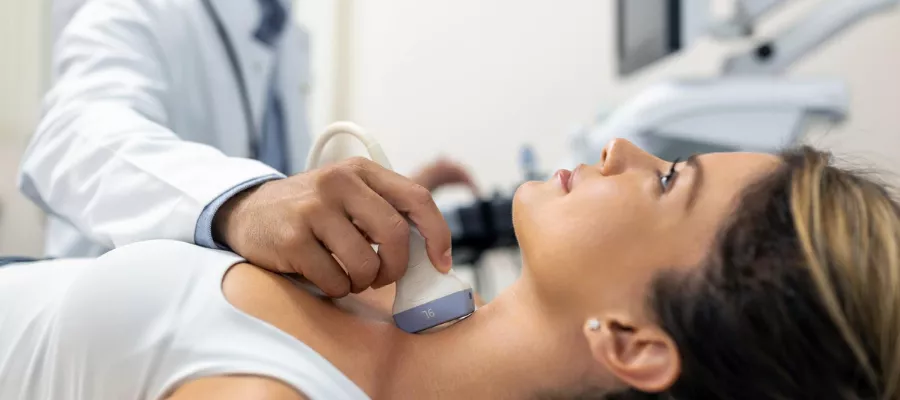
A lymph node biopsy is performed by taking a tissue sample from the suspicious lymph node with a needle or through a surgical method. Needle biopsy can be performed under local anesthesia for superficial lymph nodes. Ultrasound may help guide the needle to the correct area. Imaging methods such as computed tomography may be used for deep lymph nodes.
The main methods include:
- Fine-needle aspiration biopsy.
- Core needle biopsy.
- Excisional biopsy.
- Incisional biopsy.
In an excisional biopsy, the entire lymph node may be removed. In an incisional biopsy, only a specific part is removed. The samples are sent for pathological examination. Larger tissue samples may be required when lymphoma is suspected.
When Is a Lymph Node Biopsy Performed?
A lymph node biopsy may be performed when lymph nodes with unexplained enlargement or suspected cancer need to be evaluated. Not every enlarged lymph node requires a biopsy. Enlargement caused by infections may often decrease with follow-up or appropriate treatment. Further examination may be required for lymph nodes that remain enlarged for a long time or continue to grow.
A biopsy may be considered in the following situations:
- The lymph node remains enlarged for a long time.
- Hardness or irregularity is present in the lymph node.
- Suspicious features are seen on imaging.
- Lymphoma is suspected.
- The spread of a known cancer is being investigated.
- A diagnosis cannot be made with other tests.
The decision is made by evaluating age, symptoms, examination findings, and imaging results together.
From Which Areas Is a Lymph Node Biopsy Taken?
A lymph node biopsy may be taken from suspicious lymph nodes in the neck, armpit, groin, chest, or abdomen. The biopsy site is selected according to imaging results and the suspected disease. Lymph nodes close to the surface can be accessed with a needle or a small surgical incision. Imaging guidance may be required for deeper areas.
| Area | Commonly Used Approach |
| Neck | Ultrasound-guided needle or surgical biopsy |
| Armpit | Needle or excisional biopsy |
| Groin | Needle or surgical biopsy |
| Chest | Imaging-guided or endoscopic method |
| Abdomen | CT or ultrasound guidance |
The doctor determines the most appropriate area.
How Do You Prepare for a Lymph Node Biopsy?
Before a lymph node biopsy, the doctor should evaluate the medications being used, the risk of bleeding, and the type of anesthesia to be administered. The patient should inform the healthcare team about all medications used regularly. Blood-thinning medications in particular may require special planning before the procedure. These medications should not be stopped without a doctor’s recommendation.
Blood tests may be requested to assess the risk of bleeding. If sedation or general anesthesia will be used, fasting for a certain period may be required. Allergies and chronic diseases should also be disclosed before the procedure. If a surgical biopsy is planned, an accompanying person may be required. People who receive sedation may be advised not to drive on the same day. The preparation method varies according to the biopsy technique to be used.
How Long Does a Lymph Node Biopsy Take?
A lymph node biopsy usually takes between 15 and 60 minutes, although the duration of the procedure may vary depending on the method used. Fine-needle and core needle biopsies generally take less time. Superficial procedures performed under ultrasound guidance can usually be completed quickly. Surgical biopsies may take longer.
A lymph node located in a deep area may increase the procedure time. The use of sedation or general anesthesia may also extend the total time spent in the hospital. Short-term observation may be required after the biopsy. Therefore, the time spent at the healthcare facility may be longer than the procedure itself. The exact duration is determined by the doctor according to the location of the lymph node and the method to be used.
Is a Lymph Node Biopsy Painful?
Because a lymph node biopsy is generally performed under local anesthesia, significant pain is not expected during the procedure. A brief needle prick or burning sensation may be felt while local anesthesia is being administered. Afterward, the biopsy area becomes largely numb. During a needle biopsy, the patient may feel mild pressure or movement.
Surgical biopsies may be performed under local anesthesia, sedation, or general anesthesia. The method used is determined according to the location of the lymph node. Mild pain and tenderness may occur after the procedure. These symptoms usually decrease within a few days. Simple pain relievers may be used if the doctor considers them appropriate. Medical attention should be sought if severe or progressively increasing pain develops.
What Are the Risks and Side Effects?
Side effects such as bleeding, infection, bruising, and temporary pain may occur after a lymph node biopsy. The level of risk varies according to the type of biopsy and the area where the lymph node is located. Serious complications are generally uncommon with needle biopsies. Recovery may take longer with surgical methods because of the incision.
Possible risks include:
- Bleeding at the biopsy site.
- Bruising or swelling.
- Development of infection.
- Temporary pain and tenderness.
- Scarring at the wound site.
- Rarely, nerve or surrounding tissue damage.
Increasing swelling, high fever, or persistent bleeding should be evaluated. A doctor should also be consulted if severe pain develops.
Lymph Node Biopsy Prices 2026
Lymph node biopsy prices in Turkey in 2026 range from an average of 10,000 TL to 70,000 TL. The costs of needle biopsy and surgical biopsy are not the same. The use of imaging guidance may affect the total fee. Sedation or general anesthesia may also create additional costs.
The main factors affecting the price of a lymph node biopsy include:
- Use of a fine or core needle.
- Performance of a surgical biopsy.
- Use of ultrasound or computed tomography.
- Anesthesia and operating room services.
- Pathological examination.
- Additional staining and laboratory tests.
There is no single standard private hospital fee across Turkey. When obtaining a final price, it should be asked whether the pathology fee is included.
Frequently Asked Questions
How many days does it take to get lymph node biopsy results?
Lymph node biopsy results are available within a few business days in most cases, but detailed tests may extend this period. A standard pathological examination can usually be completed in a short time. Additional tests may be required when lymphoma is suspected. Immunohistochemical examinations or cellular analyses may extend the reporting time.
Molecular tests may also be requested for some samples. In this case, preparation of the results may take longer than one week. An inadequate sample may require a new examination. A delayed result alone does not indicate that a serious disease has been found. Once the pathology report is ready, it is evaluated by the doctor together with other tests. The treatment plan is created according to the definitive diagnosis.
Does a lymph node biopsy definitively show cancer?
A lymph node biopsy provides important information for diagnosing cancer, but an inadequate sample may not provide a definitive result in some cases. Finding cancer cells in the collected tissue helps confirm the diagnosis. In diseases such as lymphoma, a detailed evaluation of the cellular structure may be required. Therefore, additional laboratory tests may be performed.
Sometimes, enough tissue may not be obtained with a needle biopsy. Failure to sample the suspicious area may also cause a false-negative result. If clinical suspicion continues, a repeat biopsy may be recommended. An excisional biopsy may allow a broader tissue examination. The results should be evaluated together with the examination, imaging, and blood tests. A single test may not be sufficient in every case.
Is a lymph node biopsy dangerous?
A lymph node biopsy is generally a safe procedure, but it may carry low-level risks such as bleeding and infection. Needle biopsies are usually performed through a small entry site. A larger incision may be required for a surgical biopsy. Therefore, the risks vary according to the method used.
The risk of bleeding is evaluated more carefully in people who use blood-thinning medications. Surrounding organs are also considered for lymph nodes located in deep areas. Before the procedure, imaging findings and medical history are evaluated with the aim of reducing risks. A doctor should be consulted if fever, heavy bleeding, or increasing swelling develops after the biopsy. Serious complications are generally uncommon.
What should be considered after a lymph node biopsy?
After a lymph node biopsy, wound care should be performed, strenuous activities should be limited, and the doctor’s medication recommendations should be followed. The biopsy area may need to be kept clean and dry for the specified period. The time for removing the dressing varies according to the method used. Suture care may be required after a surgical biopsy.
Strenuous exercise or putting pressure on the area may not be recommended on the first day. The doctor should determine when blood-thinning medications can be restarted. Mild pain, bruising, or swelling may occur. The symptoms are expected to gradually decrease. High fever, foul-smelling discharge, or increasing redness may suggest infection. Medical attention should be sought in cases of persistent bleeding or rapidly increasing swelling.
How long do swelling and pain last after a lymph node biopsy?
Mild swelling and pain after a lymph node biopsy usually decrease significantly within a few days. The recovery period may vary according to the biopsy method used. Discomfort usually lasts for a shorter period after a fine-needle biopsy. Tenderness may continue for a few more days after a surgical biopsy.
Mild bruising may also occur at the biopsy site. These changes usually resolve on their own over time. Medication may be used for pain control if the doctor considers it appropriate. Progressively increasing swelling is not considered normal. Severe pain, redness, or fever also requires evaluation. The healthcare team should be contacted if sudden bleeding or firm swelling develops.
Is hospitalization required for a lymph node biopsy?
For most patients, an overnight hospital stay is not required for a lymph node biopsy, and the procedure can be performed on an outpatient basis. Short-term observation is usually sufficient after needle biopsies. Patients whose general condition is suitable can return home on the same day. The follow-up period is generally shorter for procedures performed under local anesthesia.
A surgical biopsy or the use of general anesthesia may extend the observation period. Sampling from deep lymph nodes may also require different follow-up. Hospital monitoring may be required if bleeding or another complication develops. People with additional medical conditions may be monitored for longer. The decision to discharge depends on the type of procedure and the patient’s general condition.
Which methods are used to perform a lymph node biopsy?
A lymph node biopsy can be performed using fine-needle, core needle, incisional, or excisional biopsy methods. Fine-needle aspiration obtains a cellular sample. Core needle biopsy can provide larger tissue samples. In an excisional biopsy, the entire lymph node may be removed. In an incisional biopsy, only a specific part of the lymph node is removed.
Ultrasound or computed tomography can make it easier to target deep and small lymph nodes. Sentinel lymph node biopsy may also be performed in some cancers.
The appropriate method is selected according to the following factors:
- Location of the lymph node.
- Its size and structure.
- The suspected disease.
- The amount of tissue required.
The relevant specialist selects the method.