


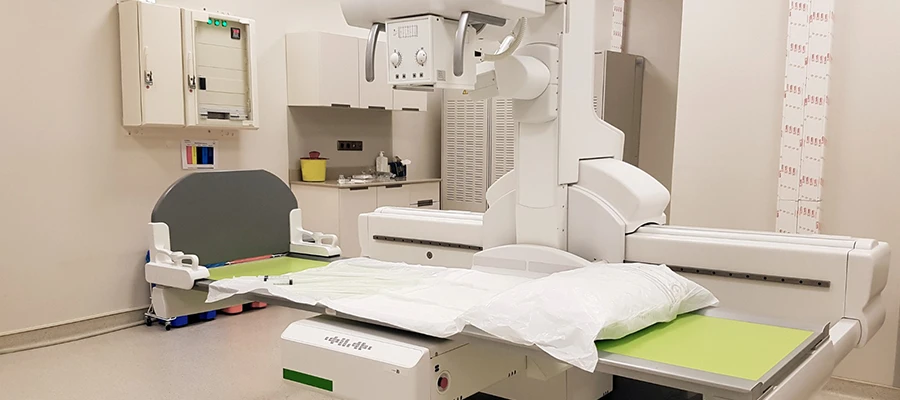
What is fluoroscopy?
Fluoroscopy, one of the medical imaging techniques that offers dynamic examination, is an advanced system that allows for the observation of the body’s internal structures in motion. Using X-rays, fluoroscopy enables the acquisition of real-time images, allowing for the monitoring of organ movements in real time. Fluoroscopy plays a significant role in the examination of the digestive system, urinary tract, and joint structures. This method allows for the evaluation not only of static images but also of how organs function. Fluoroscopy allows for the acquisition of more detailed images using contrast agents. Fluoroscopy procedures performed with modern equipment are carried out using lower radiation levels. Fluoroscopy is an important imaging method that provides guidance in both diagnosis and some treatment procedures, and is widely used in the healthcare field.
For what purposes is fluoroscopy used?
With the development of imaging techniques, it has become possible to examine organs both structurally and functionally, and fluoroscopy has gained a significant place in this field. Fluoroscopy is used particularly for the evaluation of digestive system diseases, the examination of swallowing function, and the observation of bowel movements. In addition, fluoroscopy is preferred in the examination of the urinary tract and vascular structures. Thanks to fluoroscopy, the functioning of organs can be monitored in real time, and potential problems can be detected at an early stage. This method helps in making an accurate diagnosis and facilitates the planning of the treatment process. Due to its wide range of applications, fluoroscopy plays an important role in modern medicine.
How does fluoroscopy work?
While imaging technologies are based on different principles, fluoroscopy is a system that works by continuously using X-rays. During fluoroscopy, X-rays sent into the body are absorbed by tissues at different rates, and this data is displayed on the screen in real-time. Fluoroscopy allows for the acquisition of moving images, enabling the evaluation of organ function. This method offers the possibility of more detailed examination, especially when contrast agents are used. Thanks to its real-time data provision, fluoroscopy allows for dynamic evaluation. This feature provides significant advantages in the diagnostic process.
In what situations is fluoroscopy preferred?
Choosing the appropriate imaging method is crucial for the accurate evaluation of diseases, and fluoroscopy is preferred in certain situations. Fluoroscopy is particularly used in the examination of conditions such as swallowing difficulties and stomach and intestinal problems. In addition, fluoroscopy plays an important role in evaluating joint movement and in some interventional procedures. Thanks to fluoroscopy, the function of organs can be observed in real time, and problems can be identified more clearly. This method is frequently preferred in the healthcare field because it offers quick and effective results.
What diseases can be visualized with fluoroscopy?
Early diagnosis is a crucial factor in the treatment of many diseases, and fluoroscopy stands out as an effective method in this process. Fluoroscopy allows for detailed examination of digestive system diseases, swallowing disorders, and bowel problems. In addition, urinary tract diseases and some joint problems can also be visualized with fluoroscopy. Thanks to fluoroscopy, both the structure and function of organs can be evaluated, allowing for the early detection of diseases. Due to its wide range of applications, this method plays a significant role in the diagnosis of many different illnesses.
How is real-time imaging performed with fluoroscopy?
Thanks to advanced imaging technologies, organ movements can be monitored in real-time, and fluoroscopy offers a significant advantage in this field. Real-time imaging with fluoroscopy is achieved by continuously using X-rays and instantly displaying the resulting images on a screen. This method allows for detailed examination of organ movements and functions. Fluoroscopy provides dynamic assessment capabilities, significantly contributing to the diagnostic process. This feature offers a major advantage, particularly in the detection of functional disorders.
What procedures are performed under fluoroscopy guidance?
Fluoroscopy holds a significant place among the methods used to perform medical procedures more safely and accurately. Procedures performed under fluoroscopy guidance include catheter placement, biopsy, and some interventional treatments. Fluoroscopy facilitates reaching the correct area during the procedure and reduces the risk of complications. This method provides important support in both diagnostic and treatment processes. Due to its guidance properties, fluoroscopy is a frequently used method in modern medicine.
How is a fluoroscopy scan performed?
The correct application of imaging procedures directly affects the quality of the data obtained, and fluoroscopy is performed in specific steps accordingly. During fluoroscopy, the patient is positioned appropriately, and contrast material is applied if necessary. Then, images are obtained instantly with the help of the device. Fluoroscopy is usually completed quickly, and the data obtained during the procedure is evaluated immediately. Fluoroscopy plays an important role in the diagnostic process as a fast and effective method.
Is Preparation Necessary Before Fluoroscopy?
Obtaining accurate results from imaging procedures sometimes requires preparation, and fluoroscopy may have specific guidelines in this regard. The preparation before fluoroscopy can vary depending on the area being examined. In some cases, fasting or preparation for contrast medium may be necessary. Following the doctor’s instructions before fluoroscopy ensures clearer and more accurate results. This preparation process is a crucial step that directly affects diagnostic accuracy.
How long does a fluoroscopy procedure take?
Imaging methods that offer a time advantage contribute to the rapid advancement of healthcare services, and fluoroscopy is quite practical in this respect. The fluoroscopy procedure is usually completed in 10 to 30 minutes. Although the total time may be slightly longer with the preparation process, the procedure is performed quickly and in a controlled manner. The images obtained during fluoroscopy are evaluated instantly, and the diagnostic process is accelerated. This rapid process is one of the important advantages of fluoroscopy.
Is fluoroscopy harmful?
The safety of methods used in healthcare is of great importance to patients, and fluoroscopy is a method that requires careful consideration in this regard. Since X-rays are used during fluoroscopy, there is a certain level of radiation exposure. However, thanks to modern equipment, this dose is kept to a minimum. Fluoroscopy provides significant benefits when applied only when necessary. When used correctly, this method is considered safe and plays an important role in the diagnostic process.
Differences Between Fluoroscopy and X-rays
Data obtained using different techniques in imaging methods play an important role in the diagnostic process, and fluoroscopy has its own unique characteristics among these methods. Fluoroscopy provides moving images, while X-rays provide static images. Fluoroscopy allows for the evaluation of organ function, while X-rays are used more for structural examination. Therefore, both methods are preferred for different purposes. Thanks to its dynamic imaging advantage, fluoroscopy offers the possibility of more detailed evaluation in certain situations.
Who is fluoroscopy suitable for?
Fluoroscopy, an advanced imaging method that allows for both structural and functional examination of organs in the body, is a significant technique offering effective results in specific patient groups. Fluoroscopy is particularly suitable for individuals experiencing digestive system, urinary tract, and joint problems. Detailed examinations can be performed using fluoroscopy in cases such as swallowing difficulties, stomach problems, and bowel motility disorders. Furthermore, fluoroscopy is preferred for guidance during interventional procedures. Fluoroscopy allows for the real-time monitoring of organ movements, increasing diagnostic accuracy. Fluoroscopy is applied when deemed necessary by the doctor, and its suitability is assessed individually for each patient. When used in the correct patient group, fluoroscopy is an effective imaging method that significantly contributes to the diagnostic process and has a wide range of applications in modern medicine.
What precautions should be taken after fluoroscopy?
Post-operative precautions may vary depending on the type of procedure, but the recovery process after fluoroscopy is generally comfortable and quick. Patients can often return to their daily lives immediately after fluoroscopy. If contrast medium was used during the procedure, drinking plenty of water is recommended. Rarely, mild nausea or temporary discomfort may occur after fluoroscopy, but this usually resolves on its own. Unless otherwise advised by the doctor, no specific restrictions are applied after fluoroscopy. Since fluoroscopy is a non-invasive method, the risk of side effects is quite low. Therefore, post-operative precautions are limited, and patient comfort is high. Thanks to its fast and safe nature, fluoroscopy contributes to an easy post-operative recovery process.
Fluoroscopy Prices 2026
In 2026, fluoroscopy prices typically range between €1000 and €4000.
What does fluoroscopy show?
Fluoroscopy holds a significant place among imaging techniques that allow for the examination of the mobile structure and functions of organs. Fluoroscopy is particularly useful for showing the digestive system, urinary tract, and joint movements in real-time. Swallowing function, stomach movements, and intestinal transit can be examined in detail thanks to fluoroscopy. Furthermore, the use of contrast medium allows for a clearer visualization of the internal structure of organs. Fluoroscopy offers the possibility of performing not only structural but also functional assessments. This makes early diagnosis of diseases possible. Fluoroscopy provides doctors with important data during the diagnostic process, helping them to create the correct treatment plan.
Does fluoroscopy involve radiation?
Like some imaging techniques, fluoroscopy involves a certain level of radiation, but this amount is kept to a minimum thanks to modern equipment. The X-rays used during fluoroscopy allow for the visualization of the body’s internal structures. Fluoroscopy offers significant benefits when applied only when necessary. Therefore, it is preferred after considering the balance between risk and benefit. When used correctly, fluoroscopy is considered a safe method and plays an important role in the diagnostic process.
What diseases can be diagnosed with fluoroscopy?
Early diagnosis is crucial in the treatment of many diseases, and fluoroscopy stands out as an effective method in this process. Fluoroscopy allows for detailed examination of swallowing disorders, stomach and intestinal problems. In addition, urinary tract diseases and some joint problems can also be evaluated with fluoroscopy. Thanks to fluoroscopy, diseases can be detected in their early stages by examining the movements and functions of organs. Due to its wide range of applications, this method plays an important role in the diagnosis of many different diseases.
Does fluoroscopy hurt?
The level of comfort felt during imaging procedures is an important criterion for patients, and fluoroscopy is generally known as a painless method. No incisions or procedures are made during fluoroscopy, therefore no pain is felt during the procedure. However, in some cases, a slight discomfort may occur due to the use of contrast medium. Since the fluoroscopy procedure is short, this discomfort does not last long. Fluoroscopy is a method applied with patient comfort in mind and is generally well tolerated.