


What is Computed Tomography (CT)?
Among medical imaging methods, computed tomography (CT) stands out for its rapid results and is widely used. It uses X-rays to create cross-sectional images of the body, allowing for detailed examination of organs. This method clearly visualizes bone structures, internal organs, and blood vessels. While contrast-enhanced CT makes vascular and soft tissue details more prominent, non-contrast CT may provide sufficient information in some cases. The patient must remain motionless for a short period during the procedure. CT plays a crucial role in the evaluation of conditions such as trauma, tumors, infections, and internal bleeding. The scan usually takes a few minutes, and results are obtained quickly. In modern medicine, computed tomography is considered a critical reference for accurate diagnosis and treatment planning and is applied with confidence.
For what purposes is IT used?
Methods preferred in situations requiring rapid and detailed examination offer significant advantages in the diagnostic process. Computed tomography (CT) is used to examine the structural condition of organs and detect possible diseases. It provides effective results, especially in the evaluation of trauma, tumors, infections, and vascular diseases. While contrast-enhanced CT clarifies vascular and soft tissue details, non-contrast CT may be sufficient in some cases. The patient must remain motionless for a short period during the procedure. The images are processed in a computer environment and evaluated by a specialist. Computed tomography helps in making quick diagnoses in emergency situations. This method, safely used in modern medicine, allows for a detailed analysis of patients’ health status and guides the treatment process.
How does a Computed Tomography (CT) scan work?
Advances in imaging technologies have made it possible to examine internal body structures in detail. Computed tomography (CT) scans measure density differences in tissues by sending X-rays from different angles and create cross-sectional images. These images are combined in a computer environment for detailed analysis. Contrast-enhanced CT scans provide a clearer view of blood vessels and organs, while non-contrast CT scans may provide sufficient information in some cases. The patient must remain motionless for a short period during the procedure. This method allows for detailed examination of bone structures, organs, and the vascular system. The scan usually takes a few minutes. In modern medicine, computed tomography plays a critical role in rapid and accurate diagnosis and is widely preferred.
In what situations is IT preferred?
This method comes to the forefront in clinical situations requiring urgent and rapid assessment. Computed tomography (CT) is frequently used in patients suspected of trauma, internal bleeding, tumors, and infections. It provides particularly effective results in the examination of the brain, lungs, and abdominal region. While contrast-enhanced CT clarifies vascular and soft tissue details, non-contrast CT may be sufficient in some cases. The patient must remain motionless for a short period during the procedure. The images are processed in a computer environment and evaluated by a specialist. Thanks to its rapid results, computed tomography plays a critical role in emergency situations. This method, used safely in modern medicine, contributes to effective and accurate diagnosis.
What diseases can be detected with Computed Tomography (CT) scans?
Advanced methods used in the diagnosis of many diseases offer the possibility of detailed examination. Computed tomography (CT) is used to evaluate tumors, infections, vascular diseases, and bone fractures. Abnormalities in the lungs, brain, and abdominal organs can be clearly visualized. While contrast-enhanced CT makes vascular and soft tissue details more prominent, non-contrast CT may be sufficient in some cases. The patient must remain still for a short time during the procedure. The images are processed in a computer environment and analyzed by a specialist. Computed tomography plays an important role in accurate diagnosis and treatment planning and is safely applied in modern medicine.
What are the types of CT scans?
Techniques developed to meet different clinical needs make the imaging process more flexible. Computed tomography (CT) is performed in two main ways: with and without contrast. In addition, there are specialized types of scans such as low-dose CT and high-resolution CT. While contrast-enhanced CT clarifies details of vessels and organs, non-contrast CT may be sufficient in some cases. The patient must remain still for a short period during the procedure. The images are processed in a computer environment and evaluated by a specialist. Thanks to its various scanning options, computed tomography has a wide range of applications and increases diagnostic accuracy in modern medicine.
In what situations is non-contrast CT sufficient?
In some clinical situations, satisfactory results can be obtained without the use of contrast medium. Computed tomography (CT) can be performed without contrast, especially for examining bone structures and evaluating some brain diseases. In cases such as trauma, fractures, and bleeding, non-contrast CT can provide sufficient information. Contrast-enhanced CT is preferred when a more detailed examination is required. The patient must remain motionless for a short period during the procedure. The images are processed in a computer environment and analyzed by a specialist. Even in non-contrast applications, computed tomography offers fast and effective results and is widely used in modern medicine.
How is a Computed Tomography (CT) scan performed?
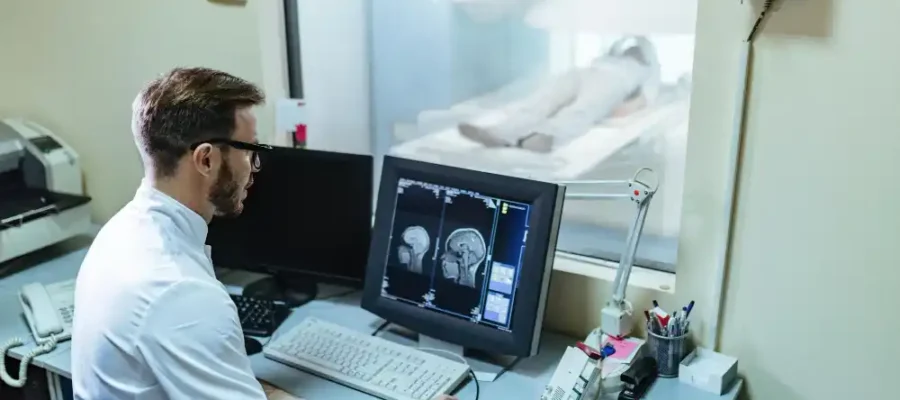
The imaging process begins with the patient being placed inside the machine and is completed quickly. Computed tomography (CT) uses X-rays to create cross-sectional images, which are then processed by a computer. While contrast-enhanced CT clarifies details of blood vessels and organs, non-contrast CT may be sufficient in some cases. The patient must remain motionless for a short period during the procedure. The images are analyzed by a specialist, and a detailed report is prepared. As a fast and effective imaging method, computed tomography is widely used in modern medicine and makes a significant contribution to the diagnostic process.
What should the pre-IT preparation process be like?
To obtain accurate and clear images, some preparations are necessary before the scan. It is important to remove all metal objects and follow the doctor’s instructions before a CT scan. If a contrast-enhanced CT scan is to be performed, fasting may be required. A non-contrast CT scan may not require special preparation in some cases. The patient should remain still for a short period during the procedure. The images are processed by computer and evaluated by a specialist. Computed tomography is an important method for accurate diagnosis, and the preparation process enhances this accuracy. It is safely used in modern medicine.
How long does a CT scan take?
This method, with its relatively short scanning time, allows for rapid diagnosis. Computed tomography (CT) scans are usually completed within a few minutes and offer a significant advantage in emergency situations. Contrast-enhanced CT scans may take slightly longer than non-contrast CT scans. The patient must remain still for a short period during the procedure. The images are processed on a computer and evaluated by a specialist. Thanks to its rapid results, computed tomography is widely used in modern medicine and speeds up the diagnostic process.
Is Computed Tomography (CT) Harmful?
Although it carries certain risks due to the use of X-rays, it is considered safe when performed in a controlled manner. Computed tomography (CT) works with low-dose radiation and in most cases does not harm the patient. Allergic reactions can rarely occur with contrast-enhanced CT scans. In some cases, non-contrast CT scans can be preferred to reduce the risk. The patient should remain still for a short time during the procedure. The images are processed in a computer environment and evaluated by a specialist. Computed tomography is an important method for accurate diagnosis and is widely used in modern medicine.
Things to Consider After a Computed Tomography Scan
Returning to daily life after the procedure is usually quick and does not require a special recovery period. The most important point to remember after a CT scan is to drink plenty of fluids if contrast material was used. This helps the body eliminate the contrast material more quickly. Mild dizziness or short-term fatigue are rare and usually resolve on their own. Since no invasive procedure is performed during a CT scan, there is no pain and patient comfort is maintained. Normal eating and daily activities can be resumed after the procedure. The images are processed in a computer environment and evaluated by a specialist. Accurate interpretation of CT scan results plays a crucial role in treatment planning. Therefore, a doctor’s evaluation should be done as soon as the results are received. In modern medicine, CT scans are considered a fast and safe method, and the post-procedure process generally proceeds smoothly.
Computed Tomography (CT) Scan Prices 2026
In 2026, CT scan prices typically range between €1000 and €5000.
Should a CT scan be done on an empty or full stomach?
Depending on the type of scan, whether the patient is fasting or not is generally determined by the doctor’s instructions. If a CT scan is to be performed with contrast, it is often recommended to do so on an empty stomach. For non-contrast CT scans, no special preparation is usually required. Following the instructions given before the procedure improves image quality and reduces potential risks. The patient should remain still for a short time during the CT scan. The images are processed by computer and evaluated by a specialist. Computed tomography is an important method for accurate diagnosis, and the preparation process directly affects this accuracy. In modern medicine, this method is applied safely, and a personalized plan is created for each patient.
How long does a CT scan take?
This method, with its relatively short scanning time, offers rapid diagnosis and is usually completed within a few minutes. Computed tomography (CT) is frequently preferred in emergency situations due to its quick results. Contrast-enhanced CT may take slightly longer than non-contrast CT. The patient must remain motionless for a short period during the procedure. Immobility is important for high image quality. The images are processed on a computer and evaluated by a specialist. Computed tomography is considered a fast and effective diagnostic method in modern medicine. Obtaining detailed images in a short time is one of the most important advantages of this method.
Does CT scans involve radiation?
Because the technology used involves a certain level of X-rays, this method involves radiation. Computed tomography (CT) is performed using low doses of radiation and is considered safe in most cases. The amount of radiation is controlled in both contrast-enhanced and non-contrast CT scans. The patient must remain motionless for a short period during the procedure. Thanks to modern equipment, the radiation dose is minimized. CT provides a significant advantage in the diagnostic process due to the detailed images it provides. The benefits often outweigh the potential risks, which is why it is widely used in medicine.
Is CT Scanning Harmful?
When performed under controlled conditions, it is generally considered a safe method and is widely used in modern medicine. Computed tomography (CT) works with low-dose radiation and is completed in a short time. Allergic reactions can rarely occur with contrast-enhanced CT scans. In some cases, non-contrast CT scans can be preferred to reduce this risk. The patient should remain motionless for a short period during the procedure. The images are processed in a computer environment and evaluated by a specialist. Computed tomography is an important method for accurate diagnosis, and the risks are weighed against the benefits obtained. In modern medicine, this method is applied safely.
What diseases can be diagnosed with CT scans?
This method, used in the diagnosis of many diseases, offers detailed imaging capabilities and has a wide range of applications. Computed tomography (CT) is used to evaluate tumors, infections, vascular diseases, and bone fractures. Abnormalities in the lungs, brain, and abdominal organs can be clearly visualized. While contrast-enhanced CT makes vascular and soft tissue details more prominent, non-contrast CT may be sufficient in some cases. The patient must remain still for a short time during the procedure. The images are processed in a computer environment and analyzed by a specialist. Computed tomography plays an important role in early diagnosis and accurate treatment planning and is safely applied in modern medicine.
How long does it take to get the CT scan results?
Once the scan is complete, results are usually prepared quickly and are often available the same day. CT scan results may vary depending on the scan volume and the center’s workflow. In emergency situations, results can be prepared more quickly. The images are processed on a computer and evaluated by a specialist. Because it provides quick results, computed tomography speeds up the diagnostic process. This is a significant advantage, especially in cases requiring emergency intervention. In modern medicine, computed tomography is an important diagnostic tool that offers fast and reliable results.
Is contrast-enhanced CT risky?
In some cases, contrast medium may be necessary, and this can carry certain risks. Computed tomography (CT) scans with contrast medium show vascular and soft tissue details more clearly. Rarely, allergic reactions or temporary effects on kidney function may occur with contrast-enhanced CT scans. In some cases, non-contrast CT scans can be preferred to reduce this risk. The patient should remain still for a short period during the procedure. The images are processed on a computer and evaluated by a specialist. Computed tomography is an important method for accurate diagnosis, and the use of contrast medium is safely performed under the supervision of a doctor.
Does a CT Scan Hurt?
For most patients, it is considered a painless procedure and is completed comfortably. Only slight noises related to the operation of the machine may be heard during a CT scan. If a contrast-enhanced CT scan is performed, the substance administered intravenously may cause a brief, mild sensation. This does not occur with non-contrast CT scans. The patient should remain still for a short time during the procedure. The images are processed on a computer and evaluated by a specialist. Computed tomography is considered a safe and fast imaging method in modern medicine and generally does not cause pain.