


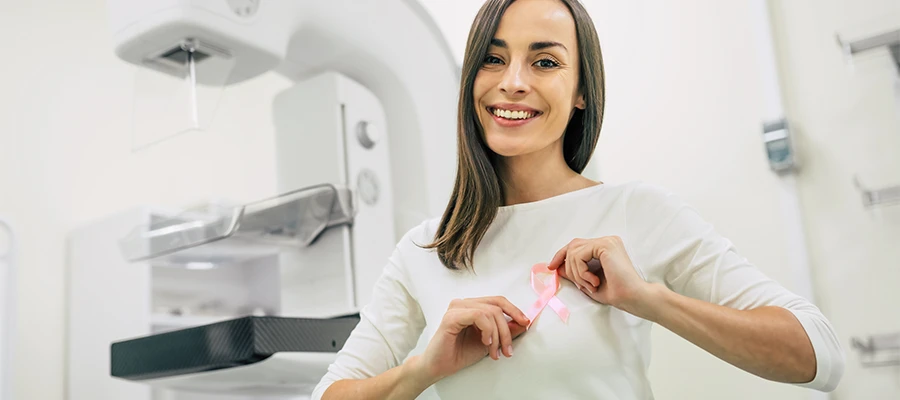
What is mammography?
In situations where early detection is vital for women’s health, mammography is a fundamental imaging method that allows for detailed examination of breast tissue. Using low-dose X-rays, mammography enables visualization of the internal structure of the breast and plays a crucial role in the early detection of breast cancer. Mammography can identify small lumps and microcalcifications that are not yet palpable. It is considered an indispensable part of regular screening programs and is routinely recommended for women in certain age groups. Mammography procedures performed with modern equipment involve lower radiation while offering higher image quality. Mammography stands out for its speed and high accuracy rate. This method makes early detection possible and allows for more successful treatment planning. Mammography is widely used as a critical imaging method in protecting women’s health.
For what purposes is mammography used?
Mammography plays a significant role among the methods used to protect breast health and detect potential diseases early in women. It is used to screen for breast cancer, examine suspicious lumps, and evaluate changes in breast tissue. Furthermore, mammography can be used for detailed examination in cases of complaints such as breast pain, lumps, or discharge. Thanks to mammography, diseases can be detected in their early stages, allowing for faster initiation of treatment. Regular mammography is recommended, especially for individuals in high-risk groups. Mammography plays a crucial role in accurate diagnosis and treatment planning, and is widely preferred in the healthcare field.
How does a mammogram work?
With the advancement of imaging technologies, detailed examination of breast tissue has become possible, and mammography has become an important part of this system. Mammography works on the principle of passing low-dose X-rays through the breast tissue and converting the obtained data into an image. Thanks to this method, the structures within the breast can be examined in detail. During mammography, the breast is slightly compressed to obtain a clearer image. This procedure is quick and provides high-quality images. Mammography offers a great advantage in terms of early diagnosis and has an important place in modern medicine.
When is a mammogram ordered?
Choosing the right imaging method is crucial when evaluating breast health concerns, and mammography is frequently preferred for this purpose. Mammograms are often requested, particularly in cases of breast lumps, pain, changes in shape, or discharge. Additionally, mammograms are performed for regular screening in women within certain age groups. Mammography allows for the early detection of abnormalities in breast tissue. This method offers significant advantages for both patients and doctors due to its speed and reliability.
What diseases can be detected with mammography?
Early diagnosis is crucial in the treatment of breast diseases, and mammography stands out as an effective method in this process. Mammography can easily detect breast cancer, benign masses, and cyst formations. In addition, microcalcifications and tissue changes can also be identified with mammography. Thanks to mammography, diseases are detected in the early stages, allowing for more successful treatment. Due to its wide range of applications, this method plays a significant role in the diagnosis of many different breast diseases and is widely used in the healthcare field.
Differences Between Screening Mammography and Diagnostic Mammography
Mammography, used in the evaluation of breast health, is divided into different types according to its purpose, offering significant advantages in the diagnostic process. Screening mammography is performed for early diagnosis in individuals without any complaints, while diagnostic mammography is applied for a detailed examination of an existing complaint. Different types of mammography offer different advantages depending on their purpose, and choosing the correct method increases diagnostic accuracy. This allows for earlier and more accurate detection of diseases. Mammography, in both its forms, holds an important place in the field of healthcare.
How is a mammogram performed?
The correct application of imaging procedures directly affects the quality of the data obtained, and mammography is performed with specific steps accordingly. During mammography, the patient is positioned in front of the machine, and the breast is gently compressed between a special plate. This process allows for a clearer image. Mammography is completed quickly and is generally painless. The images obtained are evaluated immediately. As a fast and effective method, mammography plays an important role in the diagnostic process.
Mammography Preparation Process
Obtaining accurate results in imaging procedures requires certain preparations, and mammography follows specific guidelines. It is recommended not to use deodorant, creams, or lotions before a mammogram, as these products can affect image quality. Comfortable clothing is also advised. Following the doctor’s instructions before the mammogram ensures clearer and more accurate results. This preparation process is a crucial step that directly impacts diagnostic accuracy.
How long does a mammogram take?
Imaging methods that offer a time advantage contribute to the rapid advancement of healthcare services, and mammography is quite practical in this respect. A mammogram is usually completed in 10 to 15 minutes. Although the total time may be slightly longer with the preparation process, the procedure is quite fast. During a mammogram, the patient remains still for a short time, and images are obtained quickly. Mammography offers the possibility of rapid diagnosis, and the treatment process can be started without delay. This rapid process stands out as one of the most important advantages of the method.
How to Interpret Mammography Results?
Among imaging methods used to assess breast health, mammography gains significant importance when the data obtained is analyzed accurately. Mammography results are evaluated by examining the density of the breast tissue, the presence of masses, microcalcifications, and structural changes. Mammography reports generally use specific classification systems, allowing for standardized interpretation of findings. Thanks to mammography, even small formations that cannot yet be felt by hand can be detected at an early stage. Accurate interpretation of mammography results is crucial for early diagnosis and directly contributes to planning the treatment process. When evaluating mammography findings, the patient’s age, risk factors, and clinical complaints are also taken into consideration. Mammography provides the most accurate results when interpreted by a specialist physician and helps prevent unnecessary anxiety. Mammography results, when supported by additional tests if necessary, enable a definitive diagnosis and play a significant guiding role in this process.
Who is a suitable candidate for mammography?
Early detection is crucial in protecting women’s health, and mammography is an effective imaging method applicable to a wide range of patients. Mammography is recommended for regular screening, especially for women aged 40 and over. However, it can also be performed at an earlier age for individuals with a family history of breast cancer or those in a high-risk group. Mammography is also used diagnostically in individuals experiencing symptoms such as lumps, pain, or discharge in the breast. Thanks to mammography, changes in breast tissue can be detected early, allowing for more successful treatment. Due to its rapid application and high accuracy rate, mammography is widely preferred in the healthcare field. This method plays a significant role in both screening and diagnosis, contributing to the protection of women’s health.
Things to Consider After a Mammogram
While precautions after imaging procedures generally vary depending on the type of procedure, the post-mammography process is usually quite comfortable and trouble-free. Generally, no special care is needed after a mammogram, and the person can immediately return to their daily life. Because slight pressure is applied during the mammogram, a brief feeling of tenderness may rarely occur, but this usually resolves on its own. No extra restrictions are necessary after a mammogram. Since mammography is a non-invasive method, the risk of side effects is quite low. The precautions to be taken after a mammogram are minimal, which provides a significant advantage in terms of patient comfort. Thanks to its quick and safe nature, mammography helps to ease the post-procedure process and allows for a quick return to daily life.
Mammography Prices 2026
In 2026, mammography prices typically range between €500 and €1800.
Why are mammograms performed?
Mammography plays a significant role among the methods used to protect breast health and detect potential diseases in their early stages. Mammograms are primarily used for breast cancer screening, examining suspicious lumps, and evaluating changes in breast tissue. They are also preferred for determining the cause of complaints such as breast pain, lumps, or discharge. Thanks to mammography, diseases can be detected in their early stages, allowing for a faster initiation of treatment. Due to its rapid and reliable results, mammography is widely used in healthcare facilities. By aiding in accurate diagnosis, mammography enables more effective treatment planning.
What does a mammogram show?
Mammography holds a significant place among imaging techniques that allow for detailed examination of breast tissue. It clearly shows masses, cysts, microcalcifications, and tissue changes within the breast. Even small formations that cannot yet be felt by hand can be detected early thanks to mammography. Mammography provides comprehensive information about the structure of breast tissue, facilitating the diagnostic process. This method helps doctors make accurate assessments and plays a crucial role in developing a treatment plan. Due to its wide range of uses, mammography is a frequently preferred imaging method in the healthcare field.
Does a mammogram hurt?
The level of comfort felt during imaging procedures is an important criterion for patients, and mammography is generally a tolerable method in this respect. Because the breast is gently compressed during mammography, a brief feeling of pressure may occur. This may cause mild discomfort in some individuals, but it is usually not painful. Since the mammography procedure is short, this feeling does not last long. Because mammography is a non-invasive method, it does not cause significant pain. Mammography is a method performed with patient comfort in mind and is generally easily tolerated.
At what age should a mammogram be performed?
Regular screening is crucial for protecting breast health, and mammography is one of the fundamental methods in this process. Mammography is generally recommended to be performed regularly starting at age 40. However, in individuals with a family history of breast cancer, mammography may be performed at an earlier age. Thanks to mammography, changes in breast tissue can be detected early, allowing for more successful treatment. Mammography should be planned and performed according to age and risk factors, and doctor’s advice should be followed during this process.