


What Is PRP?
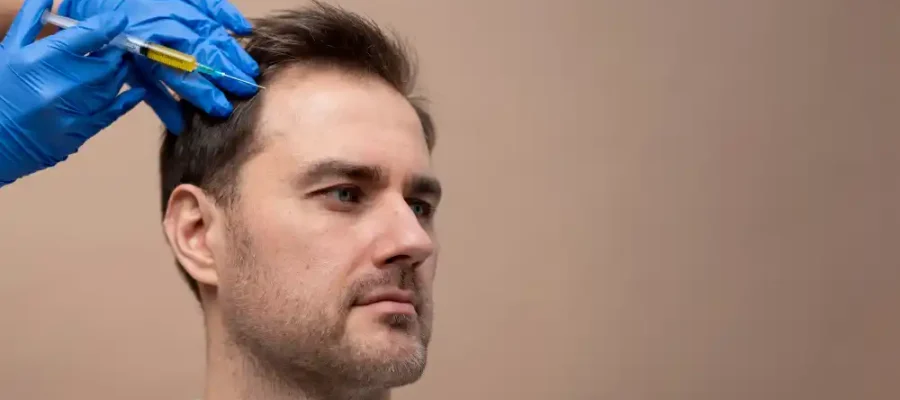
PRP, known as platelet-rich plasma obtained from the person’s own blood, aims to strengthen hair follicles. Blood taken from the patient is separated in special tubes during the procedure. PRP hair treatment involves injecting this plasma into the scalp. Some platelets contain growth factors that help support hair follicles. :contentReference[oaicite:0]{index=0}
It may revitalize weakened roots. It can reduce hair loss. It may help thicken existing hair strands. It is considered a natural approach. It does not require surgery. It is suitable for both men and women. It is more effective in early-stage hair loss. Regular sessions are recommended. Specialist evaluation is essential.
How Is PRP Hair Treatment Applied?
After blood is drawn, PRP is applied to the scalp via micro-injection. The hair is cleaned before the procedure. The collected blood is processed in a centrifuge device. Platelet-rich plasma is obtained. This plasma is injected using fine needles.
The procedure usually takes thirty to forty-five minutes. A local anesthetic cream may be used. Mild stinging may be felt. Daily life can be resumed afterward. Hair should not be washed on the first day. Sessions are typically planned at intervals of three to four weeks. An average of three to six sessions is recommended.
Who Is Suitable For PRP Hair Treatment?
It is suitable for individuals experiencing hair loss whose follicles are not completely lost. It is more effective in early hair loss stages. PRP hair treatment can be applied to both men and women. It may help slow genetic hair loss.
It may support recovery after hair transplantation. Its effect is limited in complete baldness. It is not recommended during pregnancy. Individuals with blood disorders require caution. Specialist evaluation is essential. Regular session compliance is important.
Benefits Of PRP Hair Treatment
PRP application may help strengthen hair follicles and reduce hair loss. Growth factors within platelets support follicle renewal. PRP hair treatment may help thicken hair strands and improve root strength.
Hair density may increase. Natural materials are used. The risk of allergy is low. It does not require surgery. It can support results after hair transplantation. Regular sessions improve effectiveness. Healthy lifestyle habits enhance results.
Before And After PRP Hair Treatment
Following pre- and post-care rules is essential for successful results. Blood-thinning medications should be reported beforehand. Hair should be clean on the day of the procedure. Alcohol consumption should be reduced.
Hair should not be washed for 24 hours after treatment. Sauna and intense exercise should be avoided. The injection area should not be irritated. Mild redness may occur but is temporary. Follow specialist recommendations carefully. Adhering to the session schedule improves results.
Is PRP Hair Treatment Painful?
It is generally well tolerated when a local anesthetic cream is used. Numbing cream is applied before the procedure. PRP hair treatment uses fine needles for injections. Mild stinging may be felt.
Pain level depends on individual sensitivity. Most patients are satisfied with the procedure. It typically lasts thirty to forty-five minutes. Mild sensitivity may occur afterward. Severe pain is not expected. Daily life can be resumed the same day.
Recovery Process After PRP Hair Treatment
Recovery is usually quick and smooth. Mild redness may occur after the procedure. The scalp may feel slightly sensitive. These effects usually subside within a few hours.
Hair should not be washed for 24 hours. Sauna and heavy exercise should be avoided. Injection areas should be protected. Swelling is rare. Daily routine can be resumed immediately. There is no permanent scarring. Regular sessions should be continued.
Side Effects And Risks
When performed correctly, PRP hair treatment is generally safe. Since the patient’s own blood is used, allergy risk is low. Mild redness or sensitivity may occur. Bruising is rare.
Infection risk increases in non-sterile environments. Individuals with blood disorders should be cautious. It is generally not recommended during pregnancy. Serious side effects are rare. Proper patient selection is essential.
Session Planning And Frequency
PRP hair treatment is usually planned in three to six sessions for effective results. Sessions are spaced approximately three to four weeks apart. The initial treatment course should be completed.
Maintenance sessions may be recommended annually. Hair structure affects results. Severe hair loss may require additional sessions. Regular application improves success. Planning should be done under specialist supervision.
Improving Hair Quality With PRP
PRP application may help improve hair quality by strengthening follicles. Growth factors support weak roots. Hair strands may become thicker. A healthier and shinier appearance may be achieved.
Hair density may increase. Hair loss rate may decrease. It is a natural supportive method. It does not require surgery. It can support results after transplantation. Regular care enhances effectiveness.
PRP Hair Treatment And Other Treatments
PRP hair treatment can be combined with mesotherapy and hair transplantation. Each method works with a different mechanism. PRP stimulates follicles with growth factors. Mesotherapy provides vitamin support.
Hair transplantation transfers permanent grafts. PRP is preferred in early stages. Advanced baldness may require transplantation. Combined treatments may increase success. Laser therapies may support circulation. Personalized planning is essential.
PRP Hair Treatment Prices 2026
Prices may vary depending on the treatment scope and individual needs. Contact us for detailed information.
Frequently Asked Questions
How long does the effect of PRP hair treatment last?
When applied regularly, the effect usually lasts between six and twelve months. Individual factors determine duration. Stimulated follicles become stronger. Genetic hair loss may still continue. Maintenance sessions are recommended. Healthy lifestyle habits support results. Smoking may reduce effectiveness. Initial results appear within a few months.
Can PRP reduce hair loss?
PRP hair treatment may reduce hair loss in early stages. Growth factors strengthen hair follicles. Weak roots are supported. Hair shedding may decrease. Hair strands may thicken. It has limited effect on completely lost follicles. Regular sessions are important. Specialist evaluation is required.
How many PRP sessions are needed?
It is usually applied three to six times for effective results. Sessions are spaced three to four weeks apart. The initial treatment course should be completed. The plan depends on hair loss severity. Maintenance sessions may be needed annually. Regular application improves results.
Does PRP make hair thicker?
PRP hair treatment may make hair appear thicker and fuller, especially when applied early. It stimulates follicles with growth factors. Weak roots become stronger. Hair strands may thicken. Volume may increase in fine hair. Results appear gradually over time.
How should hair care be after PRP?
Hair should not be washed for the first 24 hours. Avoid touching the scalp harshly. Use lukewarm water afterward. Avoid chemicals for a few days. Sauna and heavy exercise should be postponed. Mild redness is normal. Follow specialist recommendations carefully.
Can PRP be applied during pregnancy?
It is generally not recommended during pregnancy. Hormonal changes may affect results. Aesthetic procedures are usually postponed. Safety is the priority. Specialist evaluation after pregnancy is advised.