


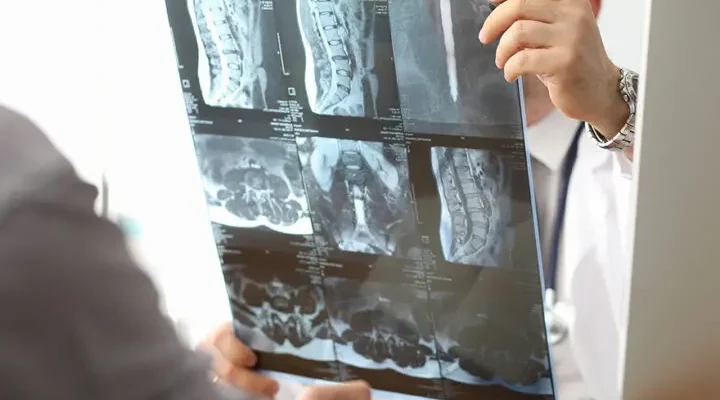
Whole spinal MRI is a medical imaging test that allows visualization of the entire spine and spinal canal. During this test, highly detailed images are obtained using magnetic fields and radio waves. :contentReference[oaicite:0]{index=0}
This test can be used for the diagnosis and follow-up of any condition in the spine. It is commonly used in diagnosing conditions such as back and neck pain, spinal cord injuries, disc problems, spinal tumors, and multiple sclerosis.
Whole spinal MRI can image the entire spine in a single session and provides more detailed and clearer images compared to other imaging methods.
However, this test takes longer and is more expensive. In addition, exposure time to the magnetic field is longer compared to other MRI scans. Therefore, whole spinal MRI is usually performed when other tests are insufficient and when necessary for accurate diagnosis.
Which Diseases Can Be Diagnosed With Whole Spinal MRI?
Whole spinal MRI provides detailed imaging of the spine and surrounding tissues and can help diagnose many different conditions, including:
- Spinal curvature: Also known as scoliosis, it is a condition caused by lateral curvature of the spine. Whole spinal MRI helps evaluate severity and treatment options.
- Spinal tumors: Tumors in or around the spine may cause nerve damage, pain, and other symptoms. MRI helps determine size, location, and characteristics.
- Nerve compression: Narrowing or damage in the spine may compress nerves. MRI can identify nerve position and compression.
- Spinal cord injuries: MRI allows evaluation of the extent, location, and severity of spinal cord damage.
- Multiple sclerosis: A neurological disease affecting nerves and cerebrospinal fluid. MRI helps monitor progression.
- Rheumatoid arthritis: An autoimmune disease causing joint inflammation. MRI helps assess damage and inflammation.
These are only a few examples, and whole spinal MRI can be used in diagnosing many conditions.
How Is Whole Spinal MRI Performed?
Whole spinal MRI is a comprehensive imaging method that covers the entire spine and spinal cord. Compared to localized MRI scans, it is longer and more detailed.
The procedure begins with the patient lying on their back inside the MRI machine. In some cases, a contrast agent is injected. Then, cross-sectional images are taken along the entire spine.
These images are processed by a computer to create a 3D view. They are used to detect abnormalities or diseases in the spine and spinal cord.
The procedure takes approximately one hour and occurs in a noisy environment. The patient must remain still and can use an emergency button to communicate with the technician if needed.
Why Is Whole Spinal MRI Performed?
Whole spinal MRI is performed to examine all parts of the spine (cervical, thoracic, and lumbar) in detail. This helps diagnose and plan treatment for various conditions such as spinal injuries, tumors, degenerative disc disease, spinal cord injuries, and other neurological disorders.
It is often used in the evaluation of patients with neurological conditions.
Is Whole Spinal MRI Harmful?
Whole spinal MRI does not involve harmful radiation, but rare side effects may occur. Due to the strong magnetic field, metal objects must not be present during the scan.
If contrast agents are used, some patients may experience allergic reactions. Therefore, it is important to inform the doctor about allergies, medications, or implants. Pregnant individuals or those with certain health conditions should consult their doctor beforehand.
Precautions Before And During Whole Spinal MRI
Whole spinal MRI requires attention to certain important details before and during the procedure:
Metal objects such as jewelry, hairpins, hearing aids, braces, and pacemakers must be removed due to the magnetic field. Inform your doctor if you have any implants.
The patient must remain completely still during the scan. It is recommended to use the restroom beforehand. Support cushions may be provided for comfort.
Since the environment is noisy, earplugs or headphones are recommended.
If contrast is used, inform your doctor about allergies or kidney disease beforehand.
MRI is generally not recommended during pregnancy unless necessary, especially in early stages.
Following medical instructions ensures a safe and effective procedure. If discomfort occurs, inform the technician immediately.
Whole Spinal MRI Prices
Whole spinal MRI usually takes longer and is more comprehensive than neck or lower back MRI, so it may be more expensive. Private health insurance may cover some MRI procedures, but coverage depends on the policy.
It is recommended to contact your insurance provider before the scan for detailed information. For more details about whole spinal MRI prices, you can visit our MRI prices page.