


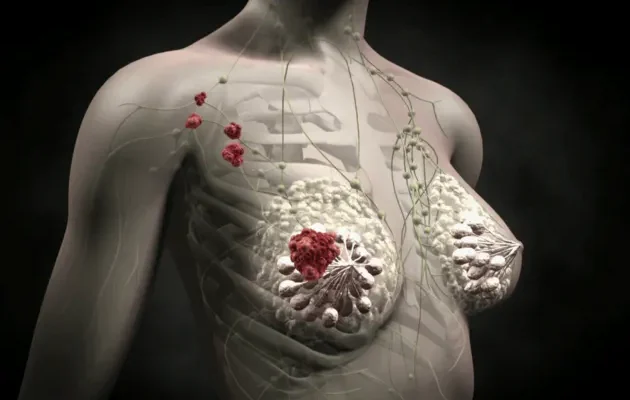
Breast cancer is one of the most common diseases among women worldwide. Although it can also occur in men, it is much more frequent in women.
What Is Breast Cancer?
Breast cancer is a type of cancer that occurs when cells in breast tissue grow abnormally and uncontrollably. It most commonly develops in the milk ducts (ductal carcinoma) or milk glands (lobular carcinoma). Cancer cells may spread to surrounding tissues over time and metastasize to other parts of the body.
What Are The Symptoms Of Breast Cancer?
Symptoms of breast cancer may vary from person to person. Common signs include a hard lump in the breast or underarm, changes in the shape or size of the breast, nipple discharge or bleeding, skin irritation or dimpling, breast pain, and redness. These symptoms do not always indicate cancer.
What Causes Breast Cancer?
The exact cause of breast cancer is not fully known, but it is thought to develop due to a combination of genetic and environmental factors. A family history of breast cancer, certain gene mutations (such as BRCA1 and BRCA2), and hormonal changes may increase the risk.
What Are The Risk Factors?
Risk factors for breast cancer include age (especially over 50), family history, genetic mutations, early menstruation, late menopause, having the first child at an older age or never giving birth, hormonal therapies, and exposure to radiation.
How Is Breast Cancer Diagnosed?
Diagnosis is made through physical examination, patient history, and imaging methods. During examination, doctors check for abnormal lumps in the breast or underarm. In suspicious cases, mammography, ultrasonography, magnetic resonance imaging (MRI), and biopsy are used for definitive diagnosis.
What Are The Diagnostic Methods?
Diagnostic tools for breast cancer include mammography, ultrasonography, magnetic resonance imaging (MRI), and computed tomography (CT). Mammography uses X-rays to visualize the breast and is especially effective for early detection.
Ultrasonography helps obtain detailed images of breast tissue and distinguishes between solid and cystic masses. MRI provides detailed information about tumor structure and spread, while CT is used to detect metastasis in other parts of the body.
How Is Breast Cancer Treated?
Treatment varies depending on the stage, size, and spread of the tumor. Options include surgery (mastectomy or lumpectomy), radiotherapy, chemotherapy, hormone therapy, and targeted therapies.
Frequently Asked Questions About Breast Cancer
One common question is whether breast cancer is genetic. Some types are linked to genetic mutations, and family history is an important risk factor.
Another common question is whether breast cancer is treatable. Many cases diagnosed at an early stage can be successfully treated.